
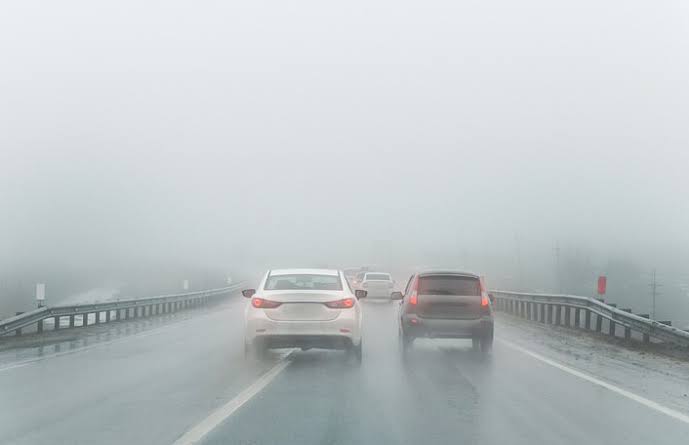
Fog can hide vehicles, curves, signs, and road edges that would normally be visible from a comfortable distance. Foggy weather driving therefore depends on controlling speed and using lights that help you see without creating unnecessary reflection.
Low beams are generally more useful than high beams in dense fog because intense light can reflect from suspended water droplets and make the view ahead appear even whiter.
Understand What Fog Does to Your View
Fog reduces contrast. Objects do not always disappear completely; instead, their outlines become harder to recognize until you are much closer.
That shorter visual range should influence your speed. If you cannot see far enough ahead to react comfortably, slowing down provides additional time to identify changing traffic or road conditions.
Use Lights That Support Visibility
Low-beam headlights help illuminate the road while making your vehicle easier for others to notice. High beams may reflect strongly from fog and can reduce useful visibility instead of improving it.
Routine vehicle lighting upkeep reinforces an important practical point: lights are only useful when the bulbs, lenses, switches, and electrical system are working as expected.
Avoid Driving With Only Daytime Running Lights
Some vehicles illuminate front daytime running lights without automatically turning on full rear lighting. In fog, that can make the vehicle harder to see from behind.
Use the normal lighting setting appropriate for poor visibility and understand how your own vehicle’s controls operate before difficult weather begins.
Let Road Markings Guide You
Looking too far into dense fog can create visual strain because there may be little detail to focus on. Instead, use lane markings and the right-side road edge to maintain position while keeping attention on traffic ahead.
Drivers preparing for uncertain conditions may include route condition awareness in their travel planning. Familiarity with major turns and exits can reduce abrupt lane changes when signs become harder to read.
| Fog Problem | Helpful Adjustment | Purpose |
|---|---|---|
| Short sight distance | Reduce speed | Adds reaction time |
| Light reflection | Use low beams | Limits glare |
| Hard-to-see lanes | Follow markings carefully | Maintains position |
| Hidden traffic | Increase following space | Adds response room |
Maintain the Tires and Windshield Too
Fog may leave moisture on the windshield, so functioning wipers and defogging systems matter. Keep the glass clean because oily interior film can make reflected light harder to see through.
The vehicle also needs reliable traction if conditions become damp. Routine tread and pressure checks can help identify tire problems before poor visibility and wet pavement combine to create a more difficult situation.
Common Fog-Driving Mistakes
Following taillights too closely is one of the easiest mistakes to make. Another vehicle can appear to provide guidance through fog, but following it closely removes the space needed if that driver brakes suddenly.
Drivers may also change lanes unnecessarily while trying to find a clearer path. Fog usually affects the entire area, so frequent lane changes often add risk without improving visibility.
Stopping in a travel lane is another serious problem. If conditions become too difficult to continue, reach a safe location away from active traffic whenever that can be done safely.
Frequently Asked Questions
Are high beams good for driving in fog?
Usually not. High beams can reflect from fog droplets and produce glare directly in front of the driver, making the road beyond the reflected light harder to distinguish.
How much should I slow down in fog?
There is no single speed suitable for every situation. Choose a speed that allows you to respond within the distance you can clearly see while also considering traffic and road conditions.
Should fog lights replace normal headlights?
Fog lights are supplemental equipment on many vehicles. Drivers should still use the lighting required for visibility and follow the vehicle manufacturer’s instructions for operating its lighting system.
Drive According to What You Can See
Fog rewards patience more than confidence. Proper lighting, slower speed, greater spacing, clean glass, and careful attention to lane markings can make limited visibility easier to manage.
Do not let another vehicle’s speed pressure you into traveling faster than your own sight distance supports. Your usable view of the road should determine the pace.


