
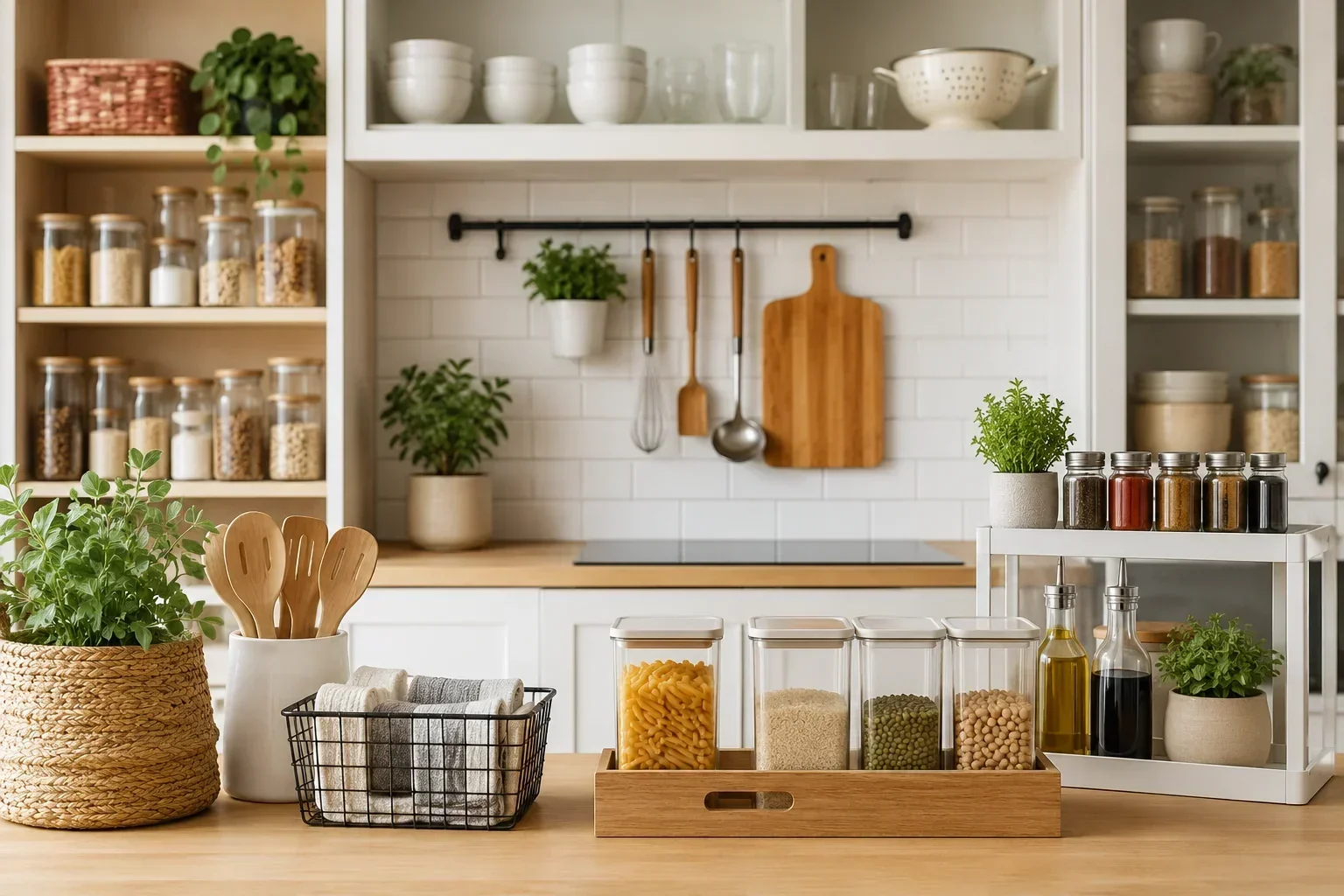
Messy kitchen storage doesn’t merely look untidy. It slows cooking because ingredients, utensils, cookware, and cleaning supplies end up far from where they’re actually used.
The fastest improvement usually comes from organizing around tasks rather than trying to make every cabinet look identical. A practical kitchen should help you move from preparation to cooking to cleanup with fewer unnecessary steps.
Organize Around Cooking Zones
Start by dividing the kitchen into basic activity zones. Keep knives and cutting boards near preparation space, pots near the stove, everyday dishes near the dishwasher or drying area, and food-storage containers close to the refrigerator.
Before buying organizers, empty one problem area and group similar items together. You may discover that the issue isn’t a lack of storage at all. Too many duplicate tools often consume more space than expected.
Give Frequently Used Items the Best Space
Prime storage means shelves and drawers that are easy to reach without bending, climbing, or moving five other objects. Those locations should hold the things you use most often.
Ideas from regional lifestyle reading may provide inspiration, but your own cooking routine should decide what earns the most convenient space.
Keep occasional appliances, specialty bakeware, and holiday serving pieces higher up or farther from the main work area. Convenience should match frequency of use.
Make Cabinets Easier to Read
Deep cabinets cause problems because items disappear behind one another. Pull-out bins, small baskets, shelf risers, turntables, and clear containers can make the contents easier to see.
Anyone browsing home and everyday features will encounter plenty of organizing ideas, but the useful ones are those that make retrieval faster without creating extra maintenance.
| Storage Problem | Simple Fix | Practical Benefit |
|---|---|---|
| Deep shelves | Pull-out bin | Easier access |
| Stacked pans | Pan divider | Faster removal |
| Mixed utensils | Drawer sections | Quicker selection |
| Hidden dry goods | Clear containers | Easier inventory |
Reduce Duplicate and Forgotten Items
A cluttered kitchen often hides unnecessary duplicates. Three nearly identical spatulas may be useful; twelve usually aren’t. The same principle applies to mugs, storage containers, baking trays, spices, and gadgets.
Use a temporary box for questionable items. If you don’t reach for them over the next several weeks, moving them out of the kitchen becomes an easier decision.
Broader digital lifestyle coverage can offer new ideas, but organization works best when it matches the household’s actual habits instead of a picture-perfect system.
Why More Containers Can Make Storage Worse
Buying bins before sorting is one of the most common organizing mistakes. Containers can hide clutter just as effectively as cabinets do.
Another problem is creating tiny categories that require constant maintenance. A drawer with seven highly specific sections may look impressive on day one but become annoying during busy weeknights. Keep categories broad enough that everyone in the household knows where items belong.
Create a Five-Minute Reset Routine
Good storage depends on what happens after cooking. Build a short reset into cleanup: return oils and spices, place utensils back in their zones, clear the preparation area, and check whether frequently used ingredients need replacing.
This matters more than occasional marathon organizing sessions. A kitchen that is easy to reset is much more likely to stay organized.
Frequently Asked Questions
What should I organize first in a messy kitchen?
Start with the area that interrupts cooking most often. For many people, that is the main utensil drawer, pantry, food-storage cabinet, or counter surrounding the stove.
Should everything be stored in matching containers?
No. Matching containers can improve visibility, but they aren’t necessary. Function matters more than appearance, especially for items that already come in practical packaging.
How can I organize a small kitchen without adding cabinets?
Use vertical space, cabinet doors, drawer dividers, shelf risers, and underused wall areas. Removing duplicates may also create more usable space than adding organizers.
Make the Kitchen Work at Cooking Speed
Your kitchen doesn’t need showroom perfection. It needs a predictable home for the tools and ingredients you reach for repeatedly.
Organize by activity, reserve the easiest storage for everyday essentials, remove duplicates, and keep the system simple enough to reset after dinner. Faster cooking usually follows naturally once searching and rearranging stop stealing your time.