
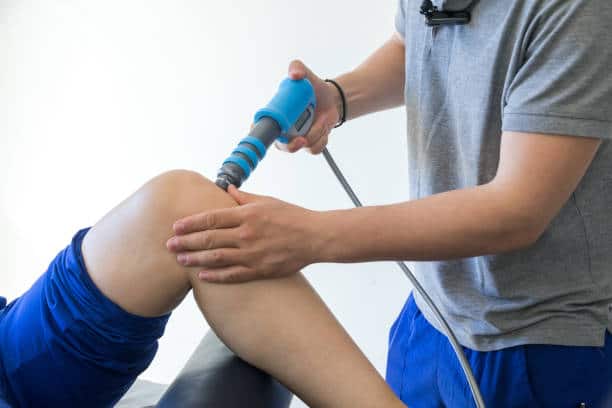
Painful knee movement can turn stairs, squatting, walking, or rising from a chair into uncomfortable tasks. The knee handles force from the hips above and the feet below, so movement mechanics can influence how load travels through it. Better mechanics may reduce avoidable strain, but persistent pain still needs its cause understood.
Look Beyond the Knee Itself
The knee bends and straightens, but its movement is affected by the hip, ankle, foot, and surrounding muscles. Limited hip control or ankle movement can sometimes change how the knee tracks during everyday activities.
Knee pain also has many possible causes, including overuse, sprains, tendon problems, cartilage injuries, arthritis, and other conditions. MedlinePlus emphasizes that the pattern and cause determine appropriate treatment.
Watch How the Whole Leg Moves
During a chair rise or shallow squat, the hip, knee, and ankle normally share the work. Trying to keep one joint completely rigid can shift stress elsewhere rather than solving the problem.
Reduce Unnecessary Load Before Adding More Exercise
If a particular activity repeatedly aggravates the knee, temporarily changing its depth, speed, resistance, or duration may allow movement without continually provoking symptoms.
People reviewing health-focused web reading may see blanket advice to either rest completely or push through discomfort. Neither rule fits every knee problem, so symptom response and the underlying cause matter.
Gradual activity changes are usually easier to evaluate than changing five parts of a routine at once.
Improve Control During Everyday Movements
Fast, uncontrolled movement can sometimes be more irritating than the movement itself. Rising from a chair slowly, using a handrail when needed, or shortening a painful squat can reduce demand while maintaining activity.
General everyday movement resources can provide ideas for healthy routines, but significant swelling, locking, instability, or pain after trauma should not be treated as a simple technique problem.
| Situation | Possible Issue | Adjustment to Consider |
|---|---|---|
| Deep painful squat | Too much knee flexion | Reduce depth |
| Fast stair descent | Higher control demand | Slow the movement |
| Sudden training increase | Load rose too quickly | Progress gradually |
| Uneven movement | Hip or ankle contribution | Assess whole-leg mechanics |
Strength Should Support the Movement You Need
The muscles around the thigh and hip help manage forces at the knee. Strength work can be useful, but the correct exercise depends on what movements are tolerated and why the knee hurts.
Broader general wellbeing content can sit alongside other lifestyle reading, though it shouldn’t replace medical assessment when symptoms are persistent or unusual. A clinician or physical therapist may assess strength, range of motion, swelling, stability, and movement patterns when needed.
Why “No Pain, No Gain” Can Mislead
Knee rehabilitation isn’t a contest to see how much discomfort someone can tolerate. Some mild exercise discomfort may occur in certain situations, while sharp pain, instability, or rapidly increasing swelling can signal that the activity needs to change.
Another mistake is blaming every knee problem on one feature such as foot position. The same visible movement can be harmless for one person and painful for another because tissue condition and injury history differ.
When Should Knee Pain Be Checked Promptly?
Seek medical care after a significant injury or when you cannot bear weight, the knee looks deformed, becomes markedly swollen, locks, repeatedly gives way, or cannot fully bend or straighten. Fever with redness or warmth around the knee also deserves prompt evaluation.
MedlinePlus lists inability to bear weight, severe pain, deformity, locking, major swelling, and fever with redness or warmth among reasons to contact a healthcare professional.
Frequently Asked Questions
Is it safe to keep walking with knee pain?
That depends on the cause and symptom pattern. Comfortable walking may be reasonable for some mild problems, but limping, worsening pain, marked swelling, or instability suggests the activity should be reduced and assessed.
Can weak hips contribute to poor knee mechanics?
Hip strength can influence how the thigh and knee move during walking, stairs, and squatting. It is one factor among several rather than a universal explanation for knee pain.
Should I avoid squats if my knees hurt?
Not automatically. Reducing depth, resistance, or repetitions may make the movement more tolerable. Persistent or sharp pain should be evaluated instead of repeatedly forcing the same painful range.
Make Movement Easier Before Making It Harder
Better knee mechanics begin with manageable movement. Adjust painful activities, build strength gradually, and consider the hip, ankle, and foot rather than focusing on the knee alone. If pain follows trauma, causes instability, produces marked swelling, or continues despite sensible activity changes, seek an appropriate medical assessment.
This article is for general informational purposes and is not a substitute for professional medical advice, diagnosis, or treatment.


